Player Personalities: Managing People, Not Just Ratings
Every player in Basketball Dynasty has a personality. Learn what Mentor, Clutch, Iron man, Loyal, Diva, Mercenary and other traits do, and how to handle trade demands.
Updated
Play freeRatings tell you how good a player is. Personality tells you what he will do: whether he takes a discount to stay, whether he sulks on the bench, whether he wants out of a losing team. In Basketball Dynasty every player has one or two traits, and they change how he plays, develops, negotiates and reacts.
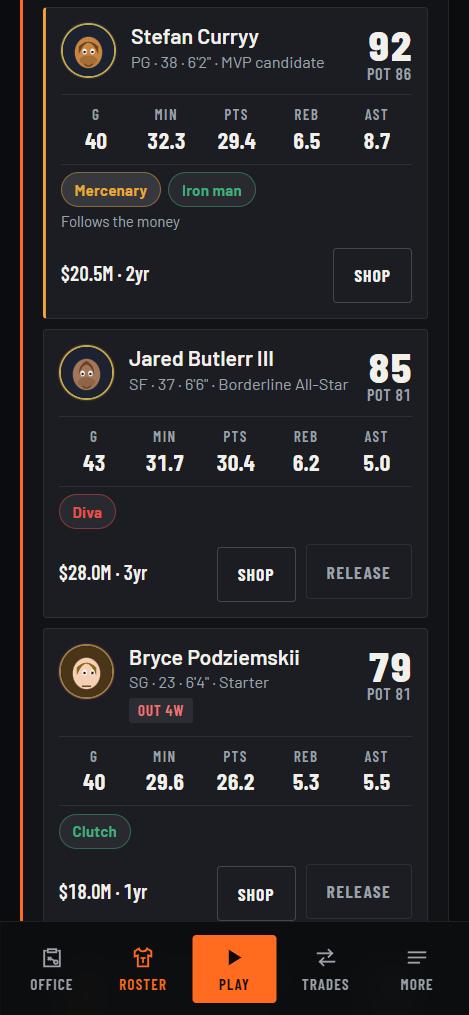
The eight traits
| Trait | What it does |
|---|---|
| Mentor | A veteran (29+) who helps teammates aged 24 and under develop about 30% faster |
| Gym rat | Develops about 40% faster |
| Clutch | Lifts your odds when he starts (up to two Clutch starters count) |
| Iron man | Tires 30% slower and gets injured far less often |
| Loyal | Re-signs about 12% cheaper and never demands a trade |
| Wants a ring | Loves contenders in free agency, won't sign with a losing team, and wants out if you lose |
| Diva | Hurts team chemistry when he is rated 78+ and not starting, and demands to start |
| Mercenary | Costs about 10% more to re-sign, loves max offers, is insulted by team-friendly ones |
Green traits are good news, red ones are a risk, and amber ones depend on your situation. About a third of players have two traits, and stars have two more often.
Traits on the court
Clutch starters give your team a small but real edge in every game they start. Iron man players are worth more than their rating on a team that plays a tight rotation, because they stay fresh while everyone else tires. A benched Diva rated 78 or higher costs you chemistry, which shows up in your win chance, so either start him or move him.
Traits in development
A young core around a Mentor grows faster, which makes a cheap veteran with the trait a smart signing for a rebuilding team. Gym rats are the best bets in the development screen: put them on a development plan and give them minutes.
Traits in contracts and free agency
Personality changes the price. Loyal players re-sign at a discount, so extend them early. Mercenaries cost more to keep and respond to money, so pitch a max offer or let someone else overpay. In free agency, a player who Wants a ring gives contenders a boost and refuses rebuilding or losing teams outright. His card tells you why, for example "Wants a ring — won't sign with a loser".
Trade demands
Two traits can turn into a demand in your Office:
- Wants a ring. A star rated 80+ on a team under .450 after week 8 tells you he wants out. You can promise to add talent (he calms down, but watches what you do), shop him to contenders, or tell him to play, which hurts his morale and the locker room.
- Diva. A Diva rated 78+ who isn't in your starting five demands to start. Say yes and he replaces your weakest starter, or an injured one first. Say no and he sulks, and the locker room tightens.
Each player makes at most one demand per season, and Loyal players never demand a trade.
How to build around personalities
- Contenders: load up on Clutch and Iron man players, and use Wants a ring to win free agents.
- Rebuilders: sign one Mentor, draft Gym rats, and trade away stars who want a ring before they ask.
- Everyone: don't stack Divas. Two stars who both need to start is a problem you created.
FAQ
Do existing saves have personalities?
Yes. Every player in every save, including AI rosters, already has traits.
Can a player's traits change?
No. Traits are part of who the player is, and they follow him through trades and free agency.
Do traits affect AI teams?
Traits mostly shape your decisions: development, contracts, free agency and demands. AI rosters have traits too, so a player you trade for keeps his.
Related: Game plan guide · Trade strategy · NBA free agency rules